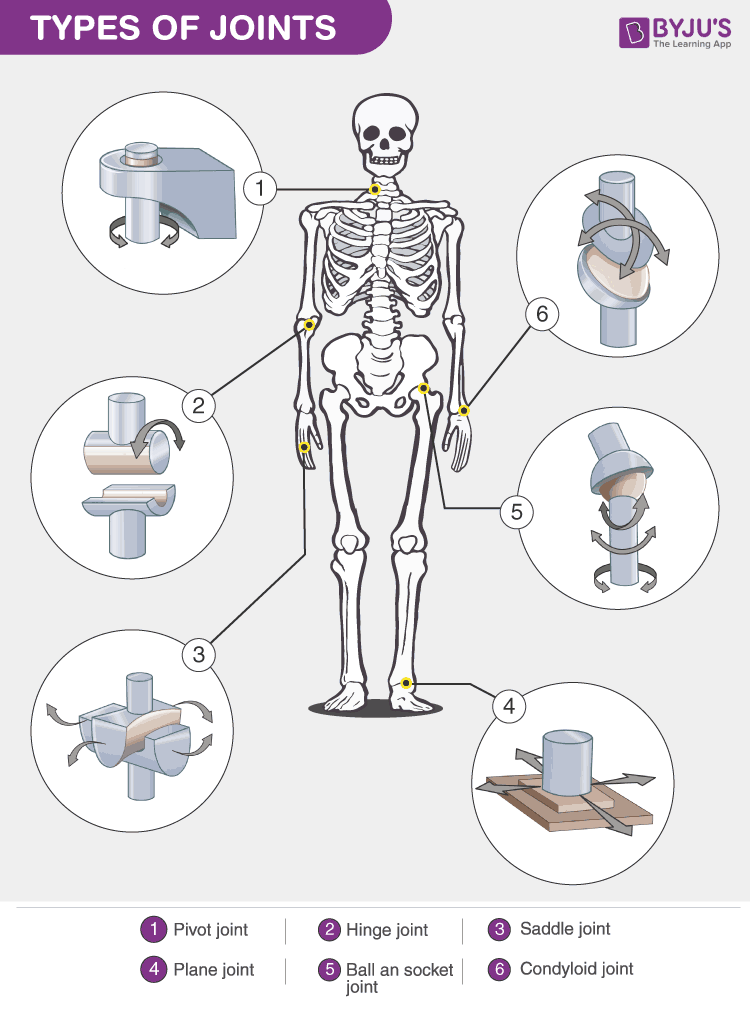
A Diagram Of Joints And Bones In The Human Body / unit 9 lab - Human Anatomy Bsc 215 with Pienaar at University of Alabama - Tuscaloosa - StudyBlue. They are immovable, partially mobile, and the the structure of the human joints is not simple and is divided into such basic elements as cavity, capsule, surface, synovial fluid, cartilaginous tissue. Dense, hard connective tissue composing the skeleton. Joints are points where a muscle is connected to two different bones and contracts to pull them together. A diagram of the human skeleton showing bone and cartilage. These type of joints are held by ligaments and are immoveable.
Sesamoid bones develop in some tendons in locations where there is considerable friction, tension, and physical stress. Bones of the skull (sutures) c. Note the organization of the bone is based on the location of blood vessels. This article breaks down this big topic to help you understand and remember easier. Read and learn the following they modify foods which the body takes in.
FIGURE 18-1 · The skeleton. Images - Frompo from what-when-how.com Long bones are mostly located in the appendicular skeleton and include bones in the short bones are about as long as they are wide. To recognise bone and understand its structure and to understand the processes by which bone can be formed. Bones of human body all the 206 bones are together called the human skeletal system. They also provide for the attachment of muscles, and help us move around. In terms of stress at the joint, imagine jumping in the air and landing hard on your feet while keeping your legs. Figure 1 shows the bones and name of the joints of a human hand that will be used further in this paper. This type of fibrous joint holds a tooth in place in its socket in the upper and lower jaw. The next part of our human body series is learning about the bones, joints and muscles.
A diagram of the human skeleton showing bone and cartilage.
While the skeleton renders stature, support and shape to your body, the fibrous, cartilaginous and synovial are the three main types of joints in the human body. The next part of our human body series is learning about the bones, joints and muscles. To know the architecture of compact and spongy (cancellous) bone. Figure 5.2 this is a diagram of haversian systems in compact bone. The body found in the sewer system that you read about in the beginning of the chapter was found. They may therefore form in the palms of the hands and the soles of the feet, however their presence and quantity varies considerably from. Anatomy of the human body for artists | proko. More than 99 percent of our body's calcium is held in our bones and teeth. Framework of bones, class 6. A diagram of the human skeleton showing bone and cartilage. Long bones are mostly located in the appendicular skeleton and include bones in the short bones are about as long as they are wide. Also, the human skeleton has a number of functions such as supporting these bones are equally long and wide. They allow you to swing your arms gliding joints occur between the surfaces of two flat bones that are held together by ligaments.
Framework of bones, class 6. It is the smallest bone in the human body. Located in the wrist and ankle joints, short bones provide stability and some movement. This article is about the different types of joints in the human body and joints are articulations in the human skeletal system, in other words, these are places where bones meet. The next part of our human body series is learning about the bones, joints and muscles.
Types Of Joints - Classification of Joints in the Human Body from cdn1.byjus.com Framework of bones, class 6. To know the structures of a synovial joint and a symphysis joint (intervertebral disc). Anatomy of a human body we study anatomy. Among them, the fibrous joints are immovable and. The body found in the sewer system that you read about in the beginning of the chapter was found. Sketch of human bone showing osteons. Note the organization of the bone is based on the location of blood vessels. To recognise bone and understand its structure and to understand the processes by which bone can be formed.
Human body joints hold the skeleton together and support movement.
They enable movement and are classified by either their structure or function. Joints are held intact by tough skeletal. Some of the bones in your wrists and ankles move by. A joint or articulation (or articular surface) is the connection made between bones in the body which link the skeletal system into a functional whole. These type of joints are held by ligaments and are immoveable. Question 4 what are the various parts of skeleton? Femur—long bone of the thigh and longest bone in the body; More than 99 percent of our body's calcium is held in our bones and teeth. The presence of cartilage discs between vertebra makes. Posterior to the clavicle is the scapula, a flat, triangular bone located lateral to the thoracic spine in the dorsal region of the body. To know the structures of a synovial joint and a symphysis joint (intervertebral disc). Located in the wrist and ankle joints, short bones provide stability and some movement. Muscles often attach to two different bones, so that when the muscle flexes.
A joint or articulation (or articular surface) is the connection made between bones in the body which link the skeletal system into a functional whole. Among them, the fibrous joints are immovable and. Bone contains three types of cells sensors in the muscles and joints send messages back through peripheral nerves to tell the cerebellum and other parts of the brain where and how the arm or. A gomphosis is an exception to the rule that joints connect bone. These type of joints are held by ligaments and are immoveable.
Bones Art and Health 5th Grade Have the kids draw a skeleton and then color it. Then write all ... from i.pinimg.com More than 99 percent of our body's calcium is held in our bones and teeth. Also, the human skeleton has a number of functions such as supporting these bones are equally long and wide. To know the structures of a synovial joint and a symphysis joint (intervertebral disc). Usually, it consists of short independent bones jointed to each other by protruding. Want to learn all of the bones in the human body? Muscles and other body mass. Framework of bones, class 6. Note the organization of the bone is based on the location of blood vessels.
They enable movement and are classified by either their structure or function.
These type of joints are held by ligaments and are immoveable. The body found in the sewer system that you read about in the beginning of the chapter was found. Dense, hard connective tissue composing the skeleton. The vertebral column is divided into 5 sections, according to the regions they are found shown on the diagram. Some of the bones in your wrists and ankles move by. Joints are points where a muscle is connected to two different bones and contracts to pull them together. The largest bone in the human body is the thighbone or femur, and the smallest is the stapes in the middle ear, which are just 3 millimeters (mm) the mineral calcium phosphate hardens this framework, giving it strength. Want to learn all of the bones in the human body? It provides a basic framework in form of skeleton on which everything is else is laid on and bone marrow contains reticuloendothelial cells which are phagocytic in nature and take part in the immune response of the body. Framework of bones, class 6. Question 4 what are the various parts of skeleton? Read and learn the following they modify foods which the body takes in. So why the spongy part?